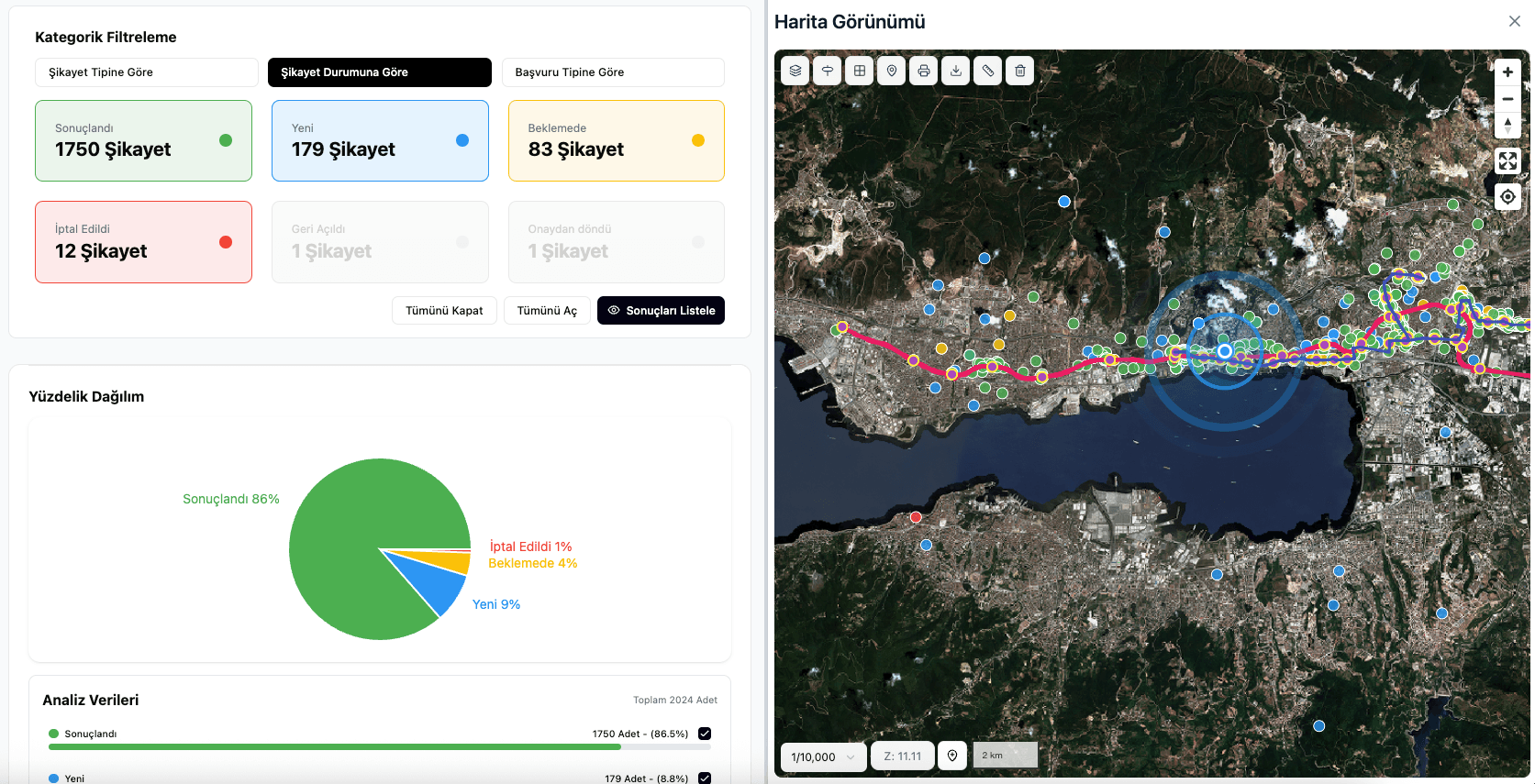
 Main dashboard and complaint distribution on the map
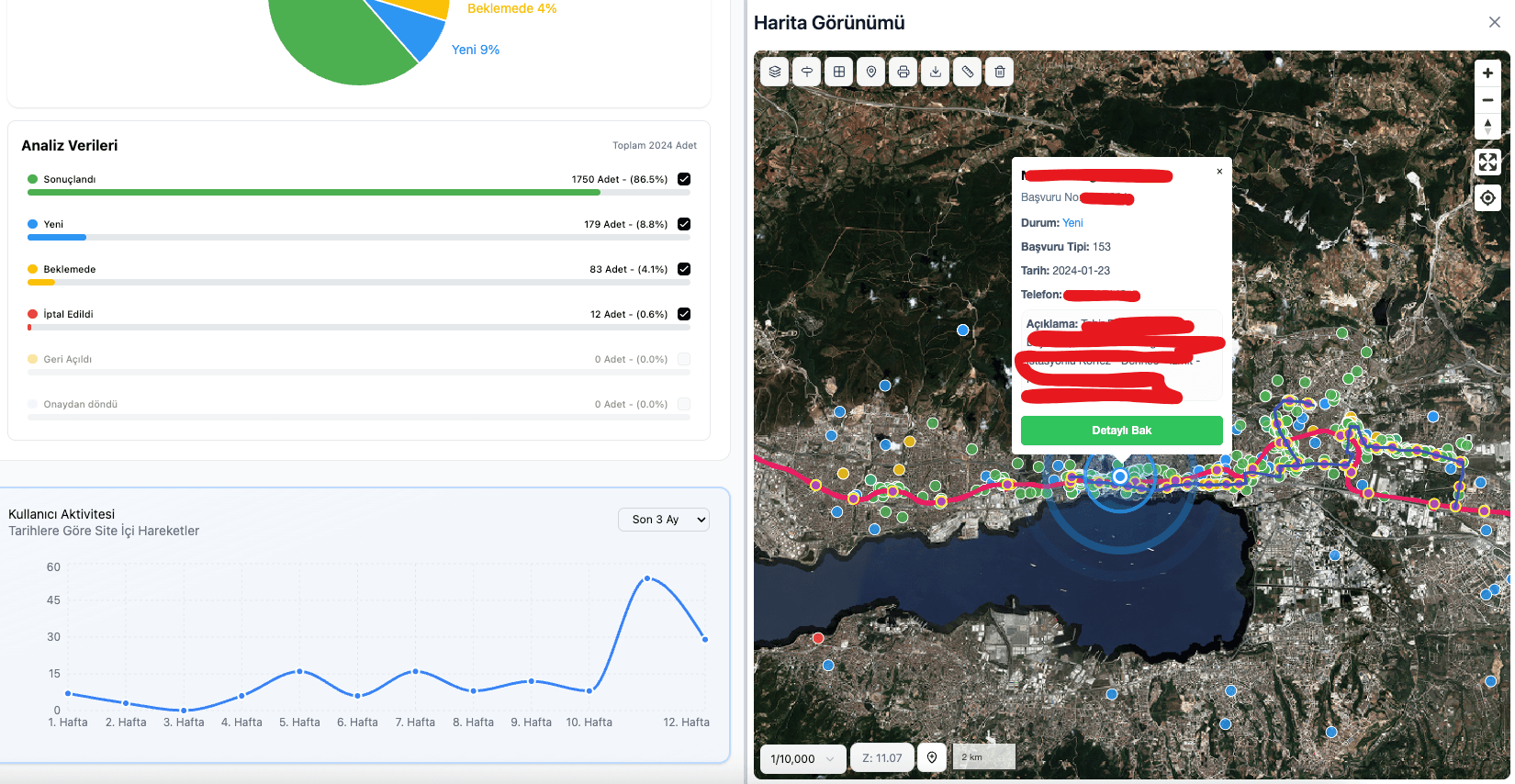 Complaint list, filtering, and search
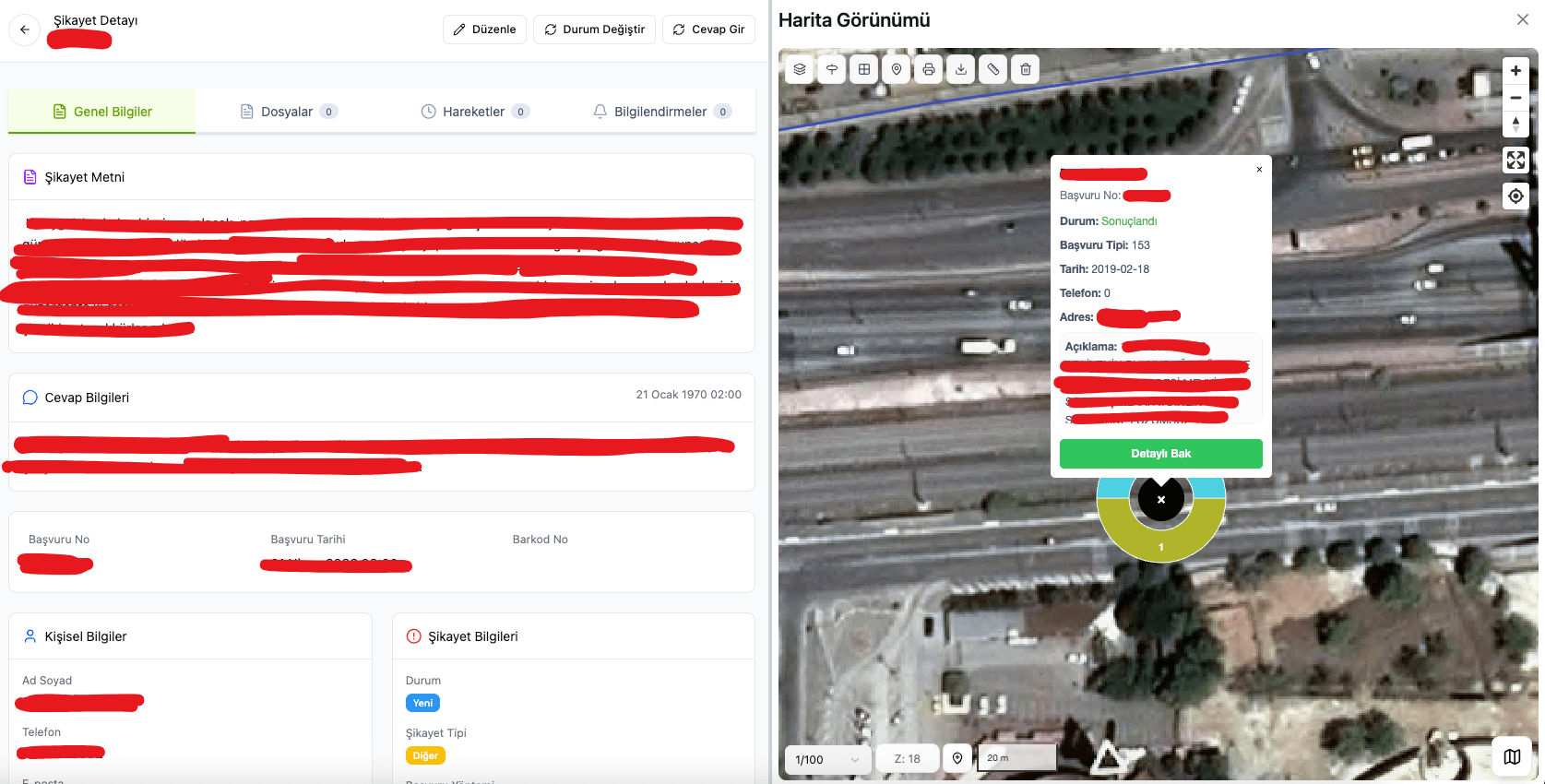 Complaint Details
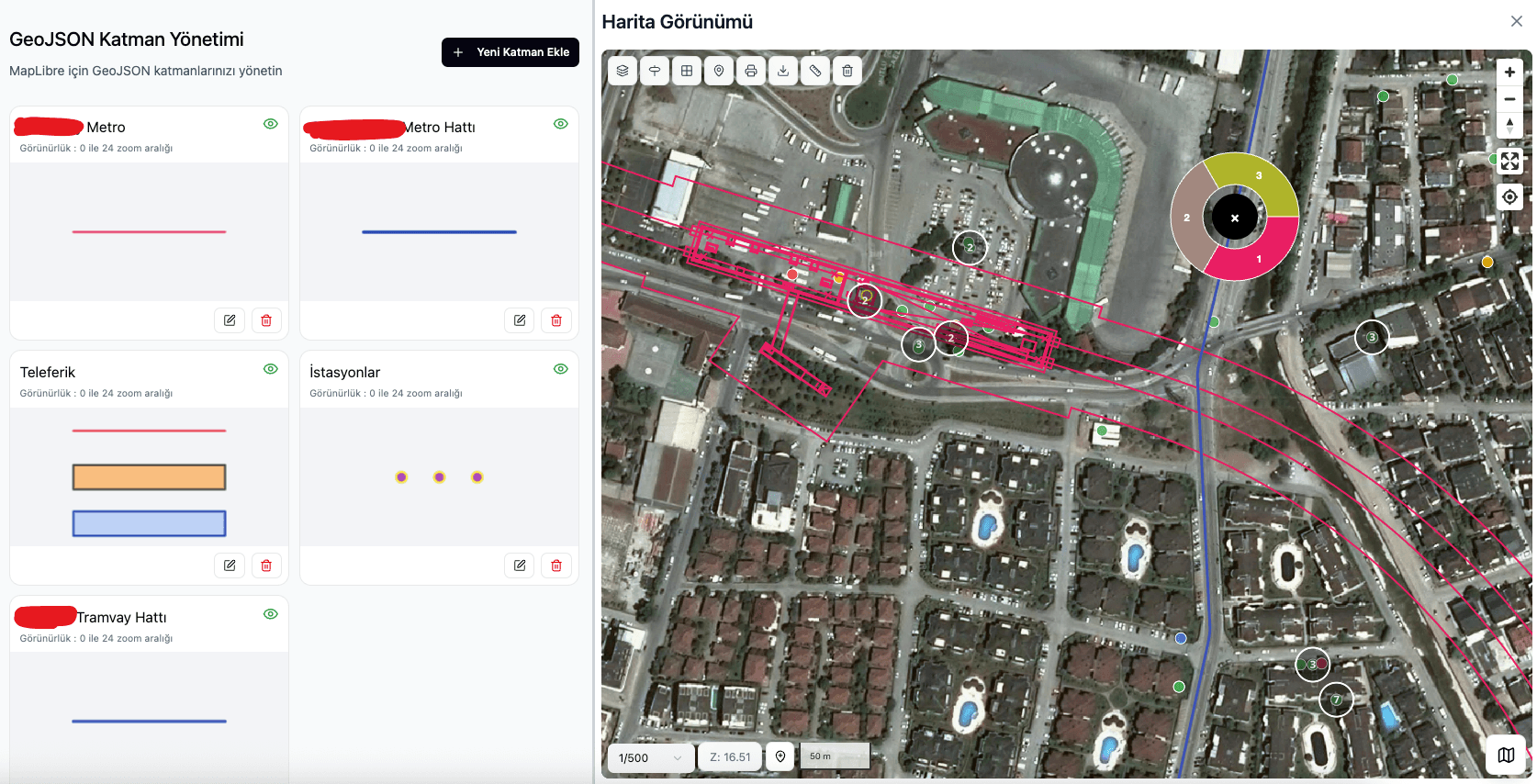 Dynamic Vector Tile Layer Management
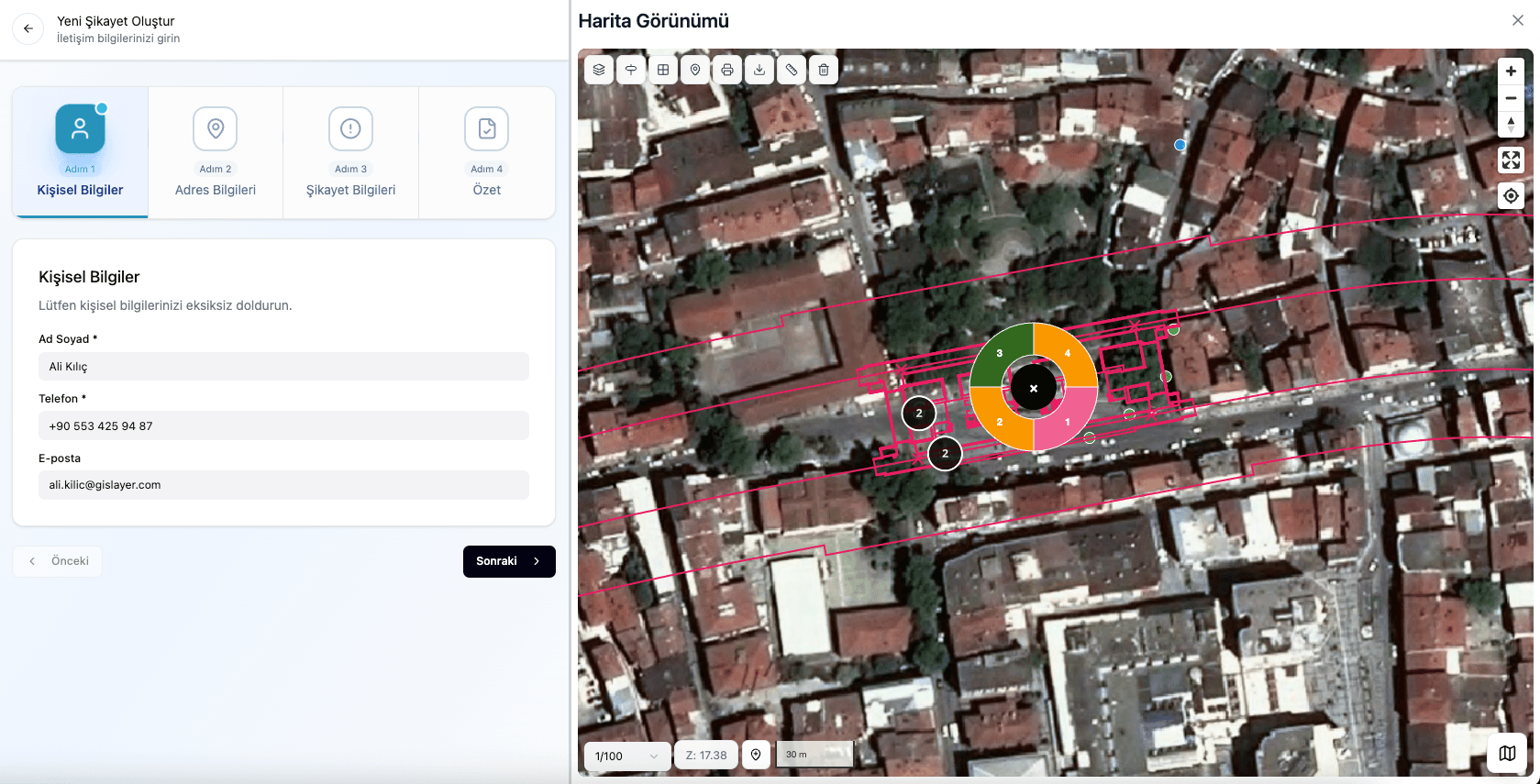 Complaint Entry - Personal Information
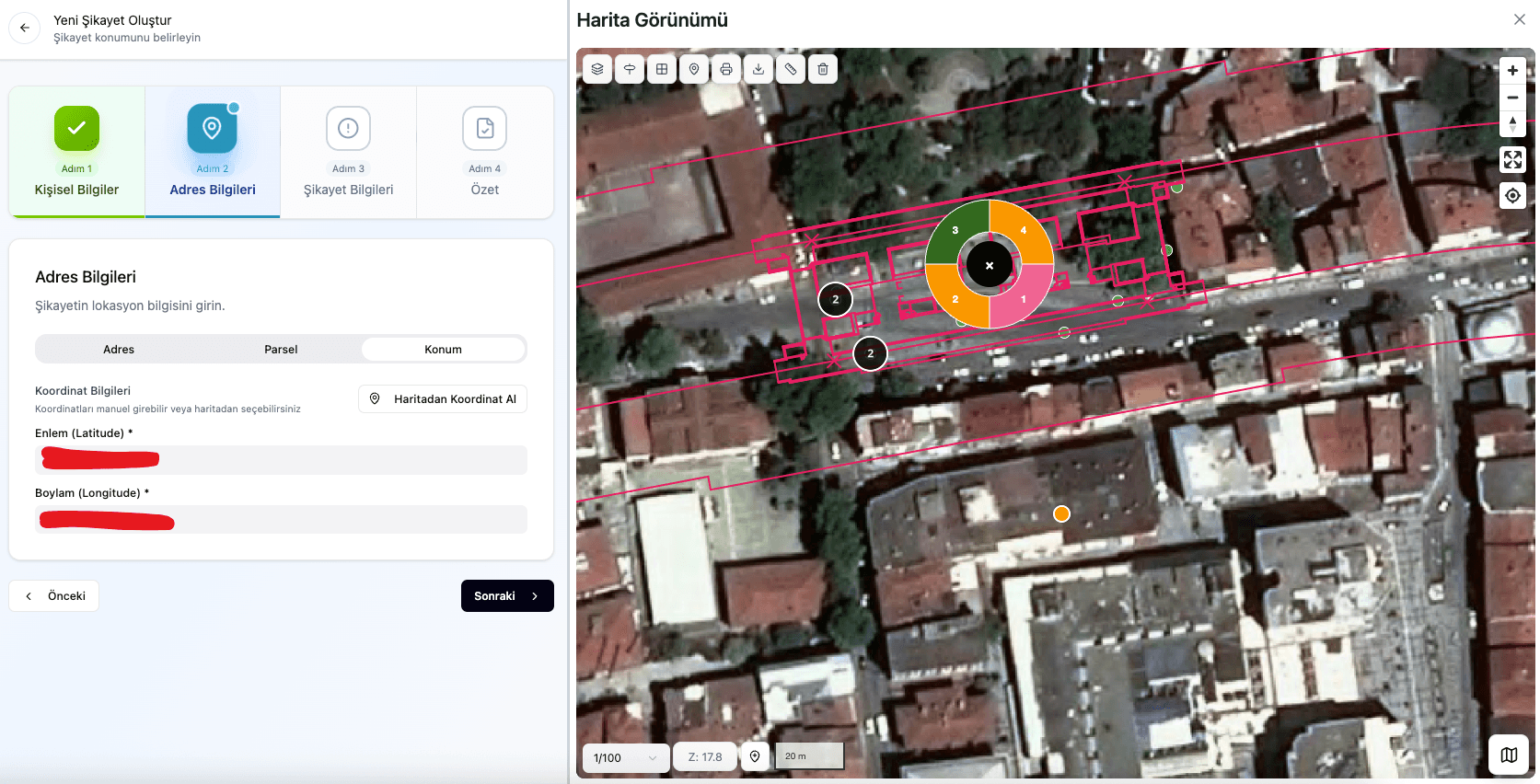 Complaint Entry - Address Information
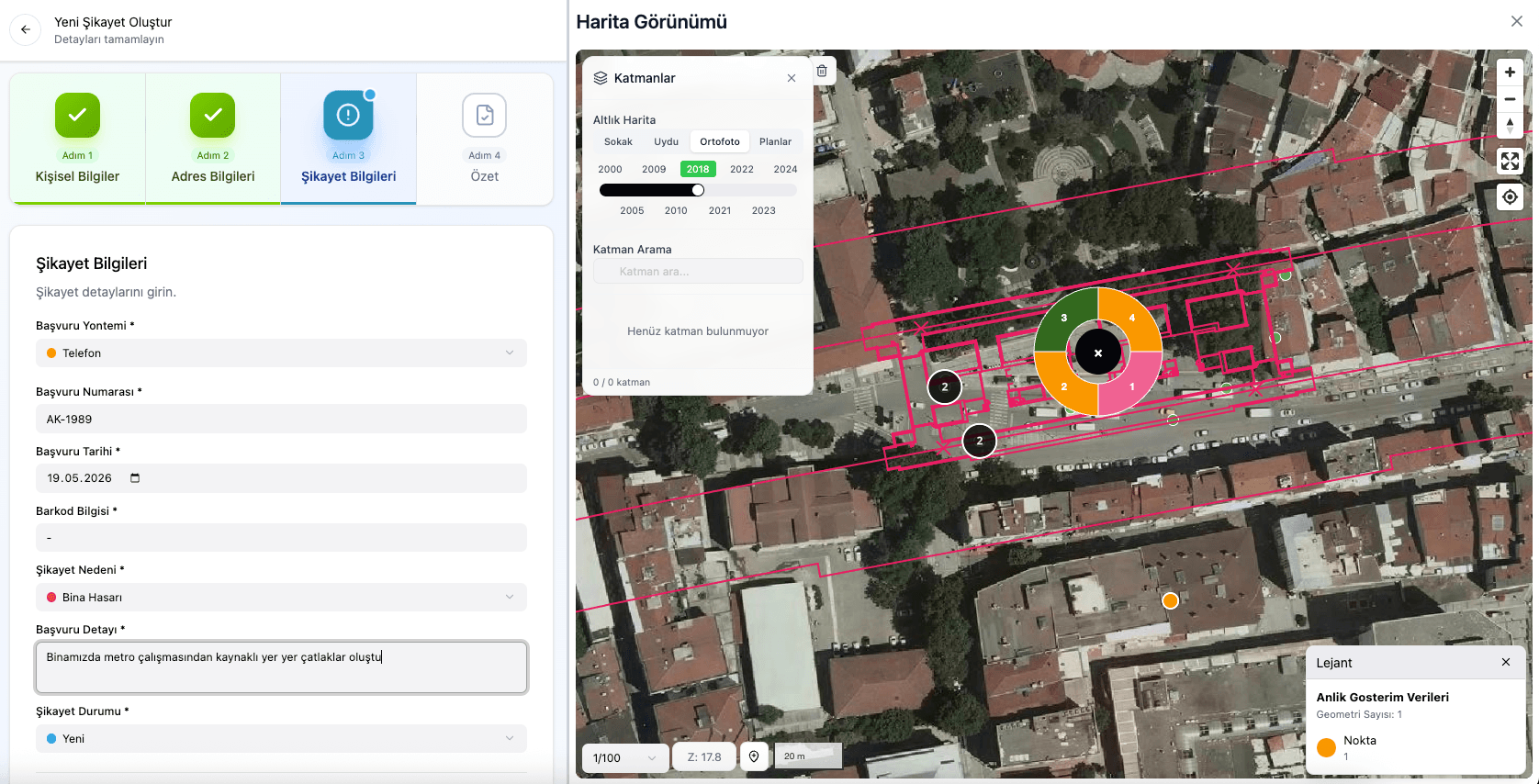 Complaint Entry - Complaint Details
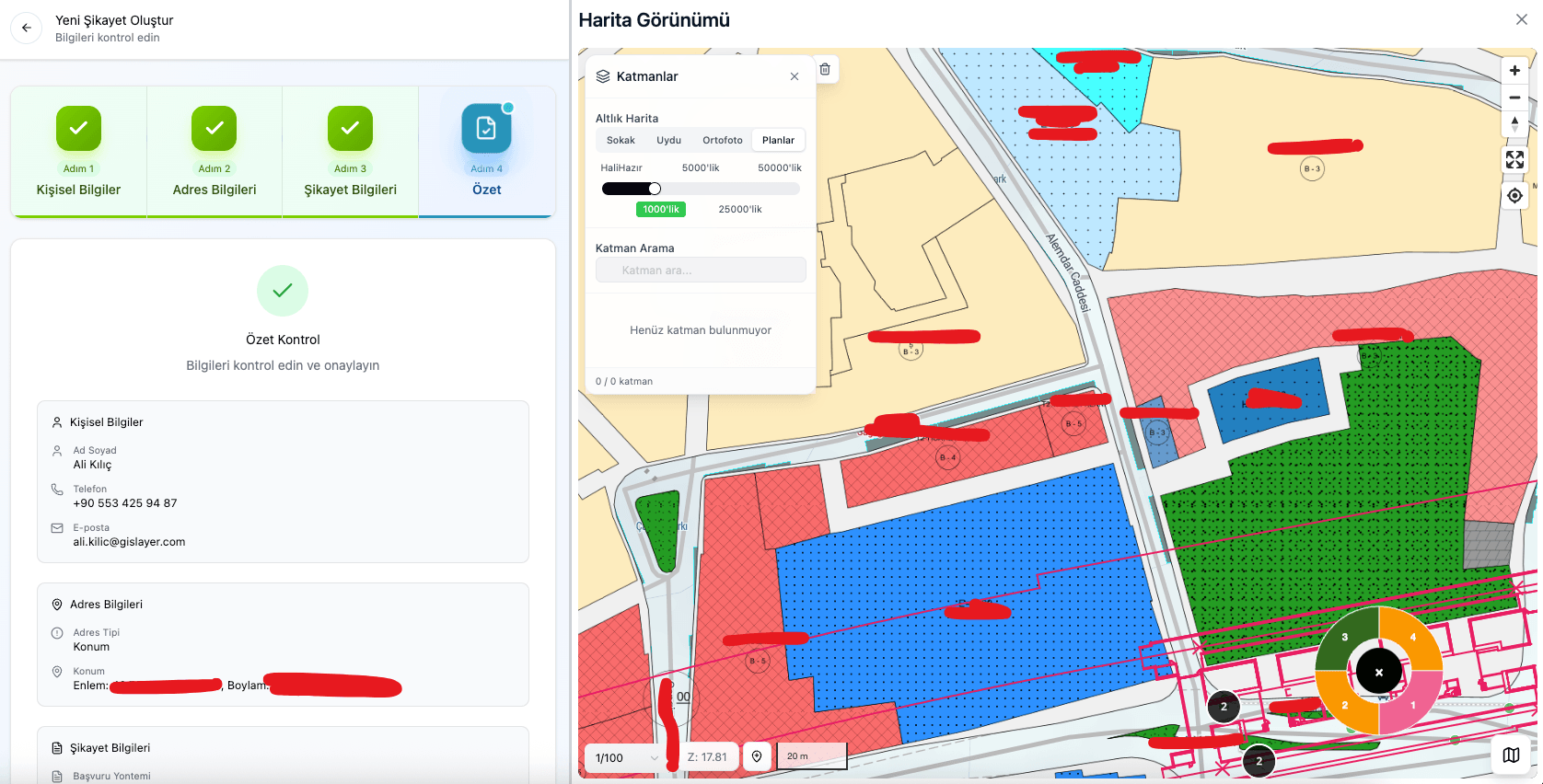 Zoning Plan and Orthophoto Display
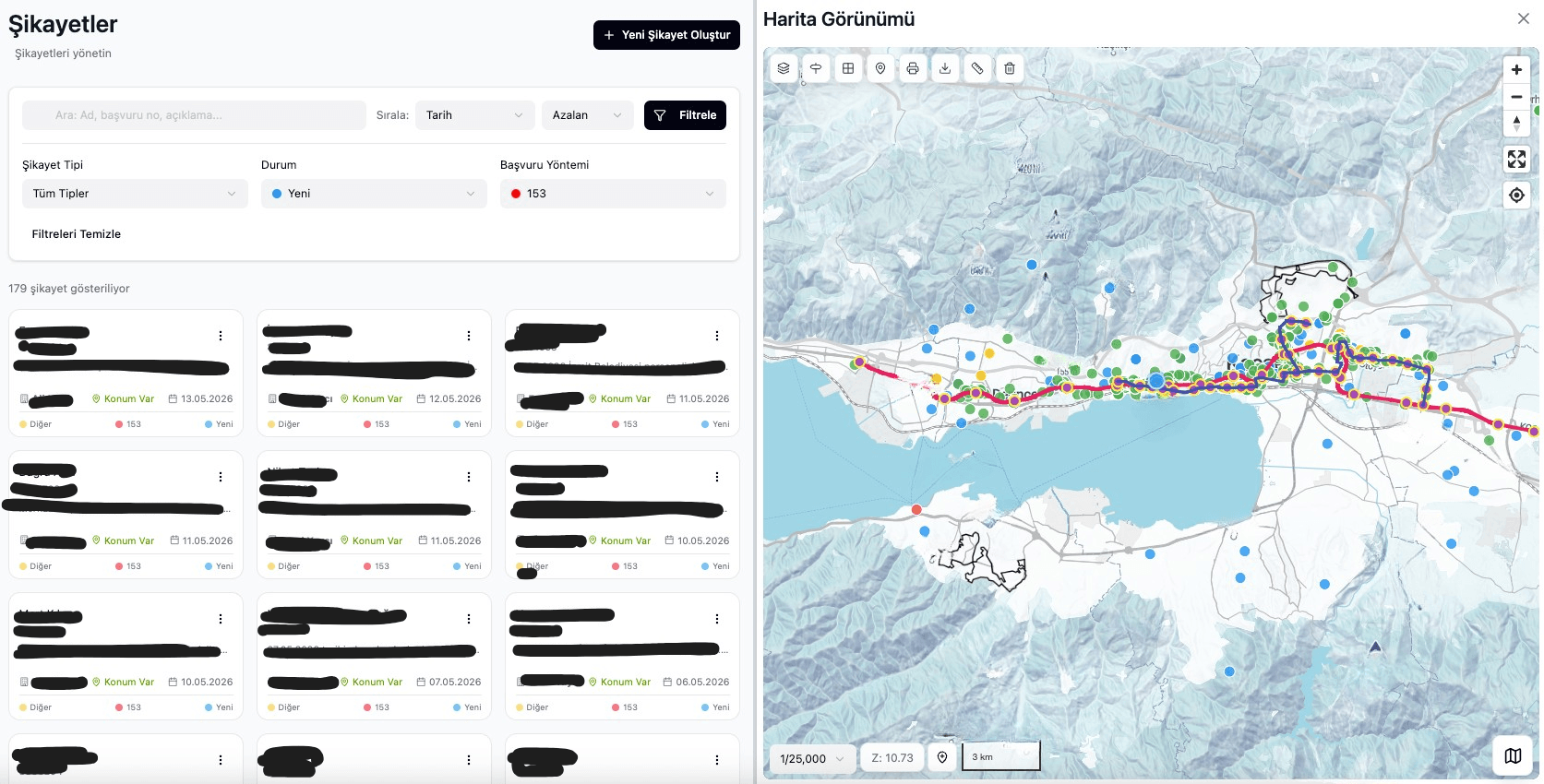 Complaint Management and Listing
Complaint Tracking and Management Platform is a web-based enterprise complaint tracking system that enables municipalities and public institutions to collect citizen applications in one digital environment, monitor them on the map, and close them with outcomes. Instead of Excel lists, email chains, and scattered files, application registration, address and location validation, status workflows, SMS notifications, attachment management, and operational reporting come together on the same data model.
The platform is designed for metropolitan municipality, district municipality, and service operator roles. Each stakeholder lists complaints within their authority, views them on the map, updates status, and tracks process history. Summary dashboards and spatial filters stand out for managers; step-by-step registration forms and detail screens stand out for call centers and field teams.
Overview and Expertise
Complaint Tracking and Management Platform is designed to meet the following core needs:
- Complaint lifecycle management: Create, edit, view, and delete with full records including application number, barcode, start date, and description.
- Multi-step registration experience: Error-free data entry through personal information → address/location → complaint details → summary steps.
- Flexible geolocation: Official address (district, neighborhood, street, building number), block–parcel selection, or direct point from map/lat–lon; complaint location can be marked independently of address.
- Map-centric operations: All complaints color-coded on the map; thematic views by type, status, or application channel; animated location display on the detail page.
- Advanced search and filtering: Text search, type/status/channel filters, sorting and paginated lists; one-click map focus.
- Status and outcome management: Status change with notes and optional SMS; closure with outcome text and date.
- Traceability: Transparent process tracking with status history, notification logs, and attachment tabs.
- Enterprise configuration: Complaint types, statuses, application channels; users, roles, permission groups, and menu design.
- GeoJSON layer management: Line, area, or infrastructure geometries as map layers; point, line, and polygon styles with zoom range settings.
- Request module: Listing of internal requests, file attachments, and status tracking.
- Spatial analysis and dashboard: Complaint density by district/neighborhood selection or drawn area; user activity charts and category-based legends.
This structure allows the full chain from citizen communication to field intervention and institutional reporting to run on one platform.
Technology and Tools
The platform is built with a modern web stack; key components include:
- Type-safe, component-based UI with React 19 and TypeScript
- Fast development and production builds with Vite
- Vector maps, markers, popups, and interactive layers with MapLibre GL
- Spatial filtering, area selection, and geometry calculations with Turf.js
- Dashboard and statistical charts with Recharts
- Map, session, and application state with Redux Toolkit
- Accessible, consistent enterprise UI with Radix UI and Tailwind CSS
- REST API integration (authentication, complaints, address, files, configuration)
- Multi-factor authentication (MFA), registration, and password reset flows
Basemap layers, SMS services, address/parcel services, and in-house integrations can be added as needed.
Process and Approach
A typical usage flow can be summarized in these steps:
- Setup and authorization: Organizations, users, and the role/permission matrix are defined; menus and screens are enabled per policy.
- Complaint registration: The operator completes the multi-step form; citizen data, location (address, parcel, or coordinates), and complaint details are recorded.
- Map and list tracking: Records are filtered on the dashboard or list; the map shows color-coded views by type/status/channel.
- Spatial focus: Complaints in a specific area are isolated by district, neighborhood, or drawn polygon; density analysis is performed.
- Status update and notification: Status changes as the process advances; citizens can be informed by SMS when needed.
- Closure: The complaint is closed with outcome description and date; full history and attachments are archived.
- Layer and context view: Related infrastructure or service areas are displayed on the map with complaint locations via GeoJSON layers.
Applications and Use Cases
The platform delivers value in scenarios such as:
- Metropolitan coordination: Monitoring complaint density, application channels, and user activity for all districts from one screen.
- District operations: Fast registration, map tracking, and field routing for local responsibility areas.
- Service operator / contractor: Processing assigned complaints, status updates, and outcome reporting.
- Call center and front desk: Standard intake of applications from phone, in-person, or digital channels.
- Executive oversight: Performance and duration analysis with status history, notification logs, and spatial filters.
- Sectoral use: Location-based complaint tracking in transport, infrastructure, environment, zoning, and similar areas.
Customization and Flexibility
- Complaint types, statuses, and channels: Color-coded, organization-specific dictionaries can be defined.
- Menu and permission design: Role-based menus and permissions; read/write control per screen.
- GeoJSON layers: Line, area, or infrastructure geometries; point/line/polygon styles and zoom visibility.
- Dynamic tables and views: Organization-specific list structures and data screens can be created.
- Map behavior: Thematic coloring modes, legends, spatial filters, and focus options adapt to your workflow.
Support and Maintenance
To keep the solution running and up to date:
- Version and bug updates are managed through a planned patch cycle.
- Configuration and training aim for rapid user adoption.
- When needed, second-level support and customization requests can be handled through technical channels.
Pricing Models
Institution-based quotes are recommended depending on user count, module scope (e.g. complaint management only or full map + GeoJSON + request package), integration depth (SMS, address service, SSO), and support SLA. Example package architecture:
- Source Code Delivery: All code is deployed on your server in a non-replicable, non-resalable form; data remains on your premises.
- Software as a Service: Data is hosted on Crocsoft servers with annual subscription licensing.
Contact our sales team for detailed pricing.
Collaboration and Communication
On projects we aim for the right scope and realistic delivery dates through:
- Regular status sharing and clear acceptance criteria,
- Close work with in-house process owners (call center, relevant units, IT),
- Pilot user feedback before go-live.
Compliance and Standards
System design is based on:
- OGC alignment: Geometry exchange with GeoJSON and map layer usage,
- Data model aligned with municipal address and parcel processes (district, neighborhood, building number, block–parcel),
- KVKK / GDPR considerations: authentication, MFA, and role-restricted data access.
(final compliance reporting is produced according to institutional requirements).
With Complaint Tracking and Management Platform, institutions can move citizen applications from scattered channels to a single hub, gain operational visibility through maps and spatial analysis, and manage the complaint lifecycle transparently.
Contact us for digital transformation in enterprise complaint tracking.


Don't hesitate to contact us
At our IT solution company, we are committed to exceptional service and support for your business needs.
Get in Touch